
Remittance

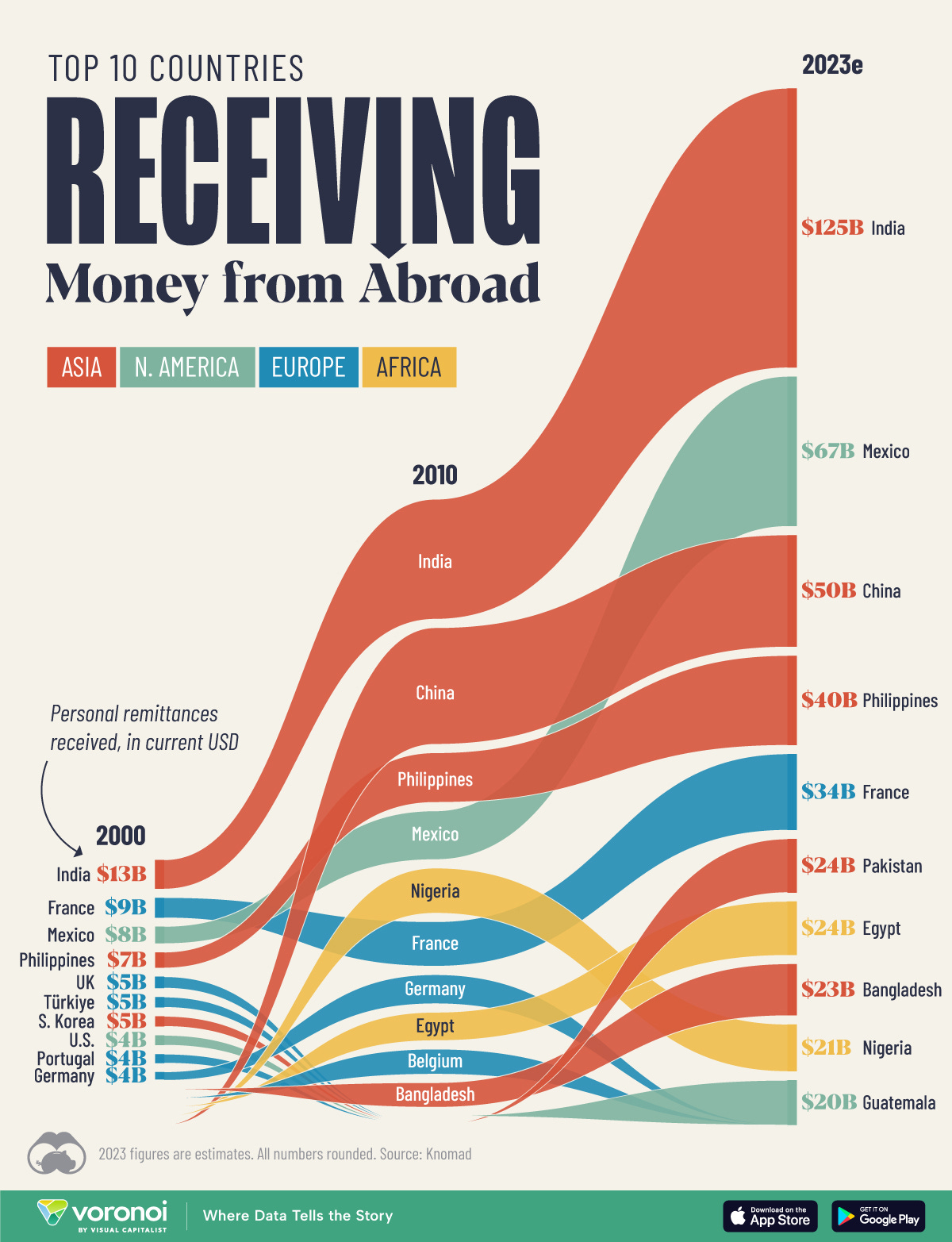
Remittances to Vietnam expected to reach $14 bln in 2023 and $14.4 bln in 2024. Remittances to Vietnam have increased since the outset of 2023 and are expected to reach $14 in the rest of the year.
As of end of September, the southern economic hub had absorbed more than $6.68 billion in remittances, a year-on-year surge of 40 percent and equivalent to 101.3 percent of 2022 figure, according to Deputy Director of the State Bank of Vietnam’s Ho Chi Minh City Branch Nguyen Duc Lenh. The foreign exchange and monetary markets have been supported by the steady increase in remittance inflows, even in the face of strong currency fluctuations and elevated rates of inflation in various nations. Over the last five years, Ho Chi Minh City has been a leading beneficiary of remittances, accounting for 44.1 percent of total remittances in 2018, 48 percent in 2019, 53.8 percent in 2020, 52.8 percent in 2021, and 55.03 percent in 2022. The World Bank lists Vietnam as one of the top 10 countries in the world for remittances, with over $10 billion sent there annually. There are around 5.3 million Vietnamese people living in 130 countries and territories throughout the world, with two million having connections to or originating from the city.
What Are Remittance Systems?
Remittance systems are financial mechanisms that facilitate the transfer of money by individuals, typically workers or migrants, to their families or other recipients in different geographic locations, often across national borders. These systems are critical for enabling financial support to families, contributing significantly to economies, particularly in developing countries.
Key Features of Remittance Systems
Purpose: To transfer money quickly, securely, and cost-effectively from one party to another, often internationally.
Methods: Includes bank transfers, mobile wallets, digital payment platforms, and traditional money transfer services.
Stakeholders:
Sender: Typically workers abroad.
Recipient: Family or dependents in the home country.
Service Providers: Banks, money transfer operators, mobile payment systems, or blockchain platforms.
Types of Remittance Systems
1. Traditional Remittance Systems
Banks: Traditional bank-to-bank transfers (e.g., SWIFT).
Money Transfer Operators (MTOs):
Examples: Western Union, MoneyGram.
Characteristics: Fast and widely accessible, but often with high fees.
2. Mobile-Based and Digital Platforms
Mobile Money Services:
Examples: M-Pesa (Africa), GCash (Philippines).
Features: Transfers via mobile phones, often without requiring a bank account.
Fintech Solutions:
Examples: Wise (formerly TransferWise), PayPal, Remitly.
Features: Lower fees, transparency in exchange rates, and digital interfaces.
3. Blockchain-Based Systems
Cryptocurrency Remittances:
Examples: Ripple (XRP), Stellar (XLM), Bitcoin.
Features: Decentralized, lower fees, faster transactions, bypassing traditional banking systems.
Stablecoins: Pegged to fiat currencies to reduce volatility (e.g., USDC, USDT).
4. Informal Remittance Systems
Hawala/Hundi Systems:
Predominantly used in South Asia and the Middle East.
Features: Trust-based networks, minimal documentation, fast transfers, but less transparent and prone to misuse.
How Do Remittance Systems Work?
Initiation: Sender selects a remittance service and provides the amount, recipient details, and payment.
Processing:
MTOs process the request through their networks.
Banks or blockchain systems may handle intermediation.
Delivery:
Direct bank deposits, cash pick-up, mobile wallets, or home delivery to the recipient.
Settlement: The provider settles transactions between sending and receiving agents.
Key Players in Remittance Systems
Banks and Financial Institutions: Traditional and regulated channels.
Money Transfer Operators: E.g., Western Union, MoneyGram.
Fintech Platforms: E.g., Wise, PayPal, WorldRemit, Revolut.
Telecom Companies: E.g., MTN, Airtel (offering mobile money).
Blockchain Platforms: E.g., RippleNet, Stellar.
Challenges in Remittance Systems
High Fees: Traditional systems charge fees ranging from 5-10%, significantly affecting low-income users.
Slow Processing Times: Bank transfers can take days, particularly for cross-border transactions.
Lack of Accessibility: Limited banking infrastructure in remote areas.
Regulatory Compliance: Anti-money laundering (AML) and know-your-customer (KYC) requirements.
Currency Exchange Rates: Hidden fees or unfavorable rates can reduce the final amount received.
Advantages of Modern Remittance Systems
Cost-Effectiveness: Fintech and blockchain platforms reduce fees compared to traditional services.
Speed: Instant or same-day transfers with digital systems.
Accessibility: Mobile money services reach unbanked populations.
Transparency: Digital platforms provide clear information on fees and exchange rates.
Global Reach: Services are available worldwide, making it easier to connect senders and recipients.
Global Impact of Remittance Systems
Economic Contribution:
Remittances are a major source of income for developing countries.
In 2022, global remittance flows to low- and middle-income countries were estimated to exceed $600 billion.
Social Impact:
Helps families cover essential expenses like education, healthcare, and housing.
Reduces poverty and enhances financial inclusion.
Economic Dependency:
In some countries, remittances make up a significant percentage of GDP (e.g., Nepal, Philippines, El Salvador).
Future Trends in Remittance Systems
Blockchain and Cryptocurrency Adoption:
Ripple and Stellar are developing solutions to make remittances faster and cheaper.
Stablecoins reduce volatility issues in crypto-based remittances.
AI and Automation:
Enhancing fraud detection and compliance checks.
Integration with Super Apps:
Platforms like WeChat and Paytm integrate remittances with other financial services.
Government and NGO Partnerships:
To reduce fees and improve access for underserved communities.